The One‑book Gallery: Morioka Shoten's
In a five-by-five-metre space near Ginza, a former bookseller is rewriting the rules of bookselling: one week at a time.


In a five-by-five-metre space near Ginza, a former bookseller is rewriting the rules of bookselling: one week at a time.


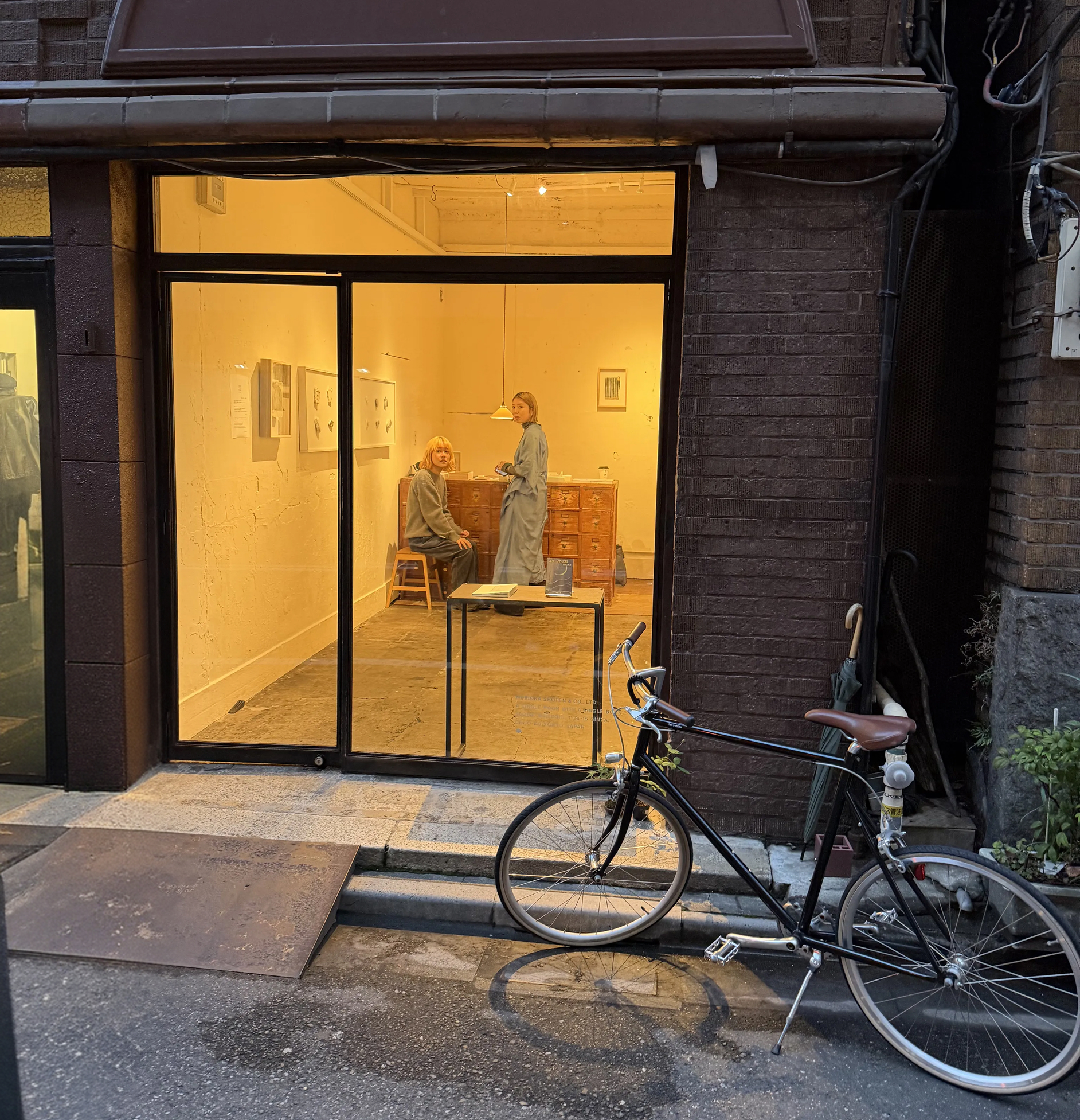
We first stumbled upon Morioka Shoten on a Saturday evening during our recent Japan Inspiration Excursion, around five o'clock when Tokyo's winter had already settled in. The cold outside made the gallery's warm minimalism feel even more inviting, though "gallery" hardly captures what this place actually is.
Most bookshops are overwhelming. Morioka Shoten distills. Founded by Yoshiyuki Morioka, a former bookstore clerk turned independent bookseller with dual passions, books and the art that brings them to life, this diminutive space near Ginza operates on a premise so simple it borders on radical: one book, one week, 52 transformations a year.
Even Morioka Shoten's logo, a rhombic geometry, holds dual meaning: an open book and a single small room. Two concepts, one symbol. It's an elegant distillation of the store's philosophy of "Issatsu, Isshitsu": A Single Room, A Single Book.
Morioka himself wasn't there that first evening. Instead, we met the ceramicist whose miniature figurines brought a story of sisters to life. Several young women were browsing, and we caught the exhibition just before closing, everything felt intimate, almost accidental in its discovery.
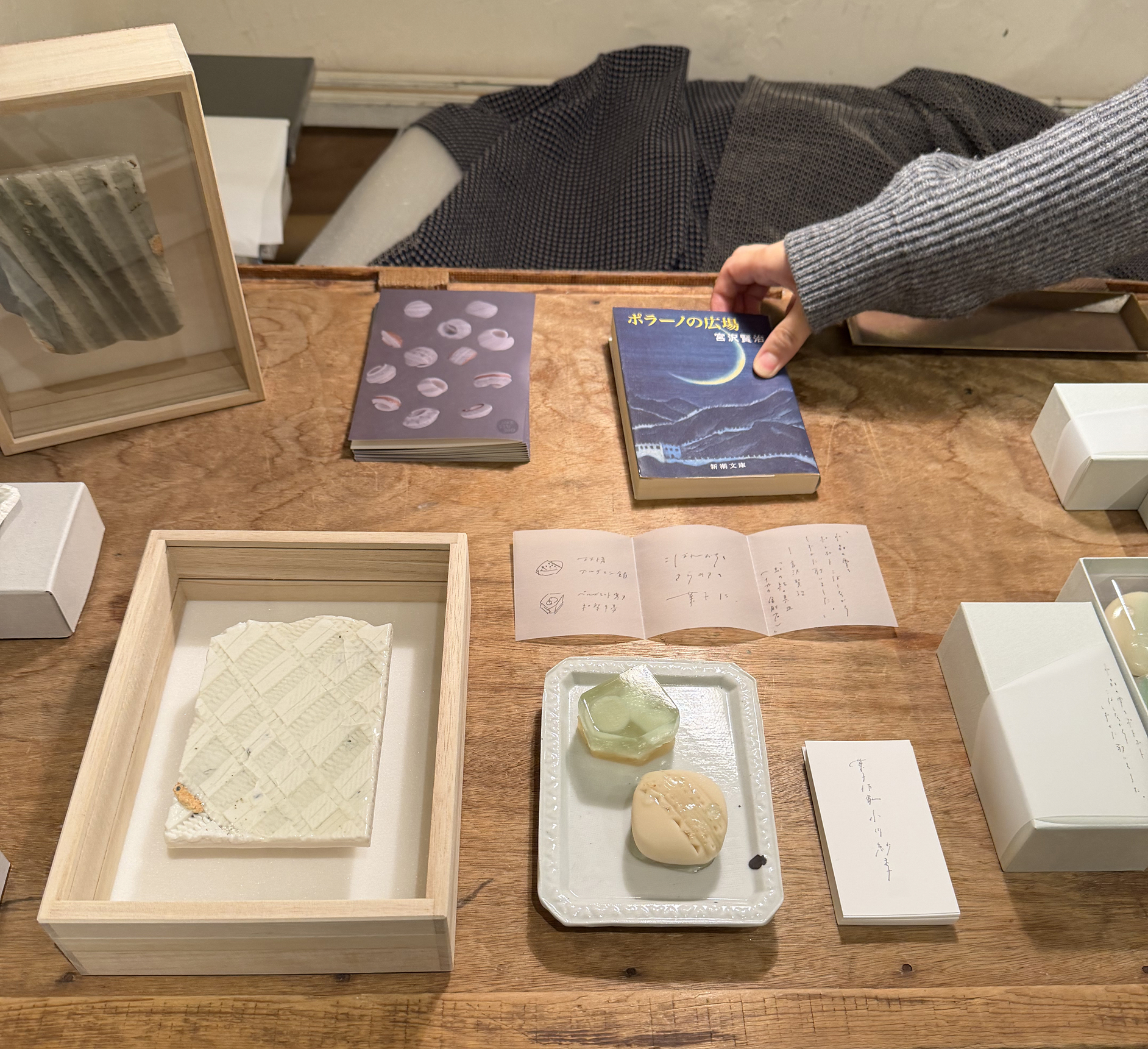
We returned. The second visit revealed the full concept: a slender book about the sea, interpreted through ephemeral sweets that resembled ceramic shards. These confections, meant to be consumed within 24 hours, were replenished each morning, a daily activation that transformed the space into something living. Alongside them, a ceramicist had created everyday objects textured with patterns pulled from the book's maritime imagery. We bought one: a magnet that captured the sea's surface in miniature.
By our third visit, with our full excursion group in tow, the exhibition had shifted again, this time to abstract watercolours interpreting yet another narrative. We gave the group space to explore, hanging back because the room is genuinely micro, maybe five metres square. A minimal counter at the back, clean lines, otherwise empty walls. Yet somehow, never empty.
Each week, Morioka conjures a small universe around a single volume. He reads voraciously (consuming around ten books a week, he told us) then invites artists to inhabit their narratives through ceramics, confections, watercolours, whatever medium best captures that particular story's essence. The concept emerged from his years working in conventional bookstores, where he noticed that book launch events, focused entirely on a single title, were always wildly successful. Why not, he wondered, create a space where that singular focus never ended?
It's an audacious business model, selling one title at a time in a world obsessed with inventory depth and algorithmic recommendations. Some weeks bring robust sales; others, perhaps just one copy. But Morioka has created something more valuable than consistent revenue: a platform for emerging artists, a weekly pilgrimage site for the culturally curious, a space where community coalesces around careful attention.
The magic lies in the layering of perspectives. There's Morioka's vision, why this book, this week, deserves singular focus. There's the artist's interpretation, translating text into tangible form. And finally, there's the visitor's own reading, informed by these previous two but ultimately independent. Three lenses on one story, each revealing different facets.
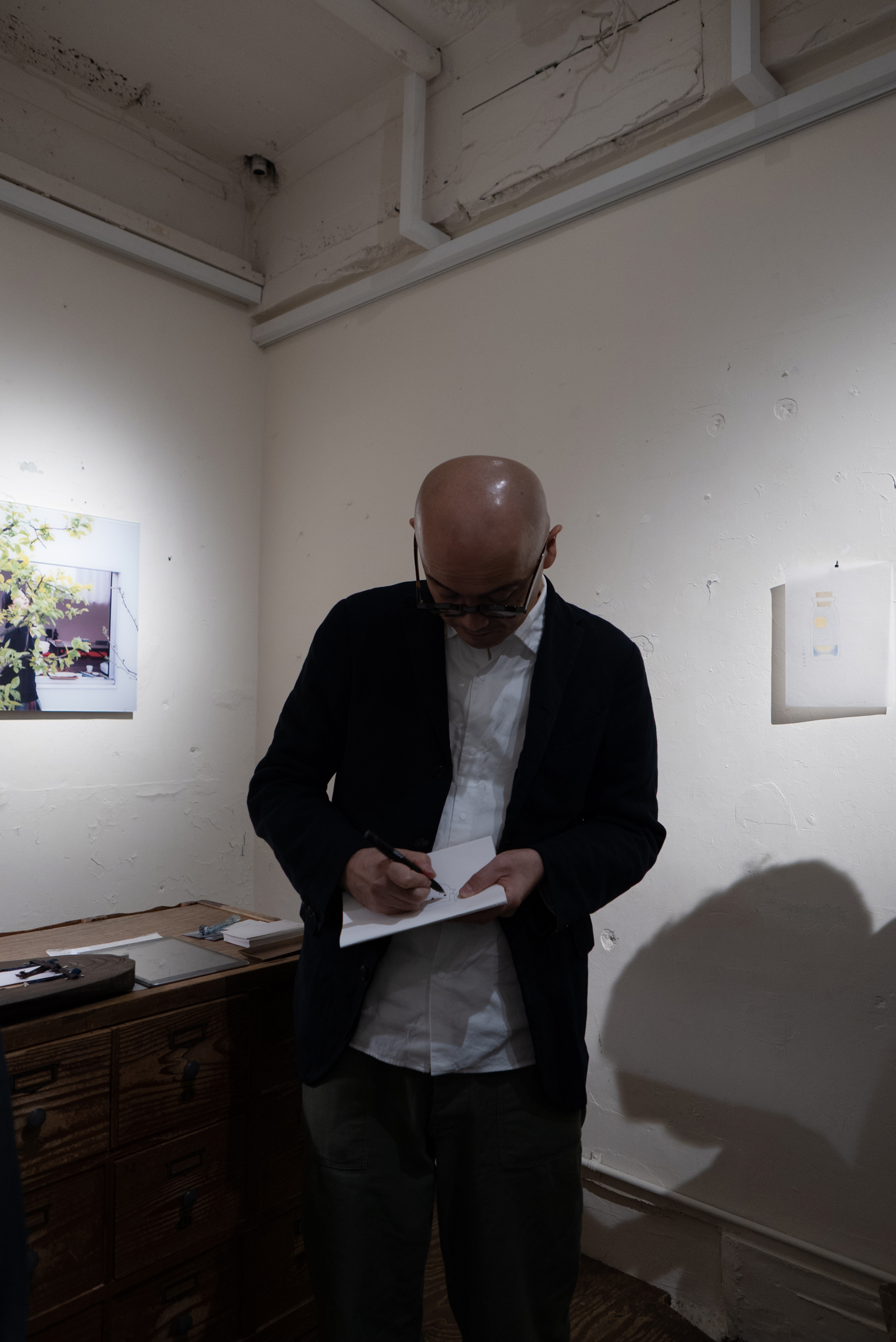
It reminds us of how we prefer experiencing films: hearing someone else's interpretation first, building our own narrative from their telling, then encountering the actual work. Two stories emerge: theirs and ours, and the space between them becomes its own form of art. Morioka Shoten operates on this same principle, except the layers multiply with each visiting artist, each curious patron.
You need insider knowledge to truly grasp why this gallery matters, it's deeply embedded in Tokyo's creative fabric, not flashy or obvious. Timing matters too. Visit on a Saturday evening as we did initially, rushing through before closing. Return mid-week, and you'll find space to breathe, to speak with the artist, to understand not just what was made but why.
There’s no sneak preview of next week’s selection, no marketing hook to guarantee return visits. It’s a living gallery that reinvents itself every seven days, 52 exhibitions a year, each one ephemeral, each one unrepeatable. The model trusts in quality and consistency of vision. Come back because you believe Morioka will have chosen well. Come back because you want to see how next week's artist interprets next week's narrative.
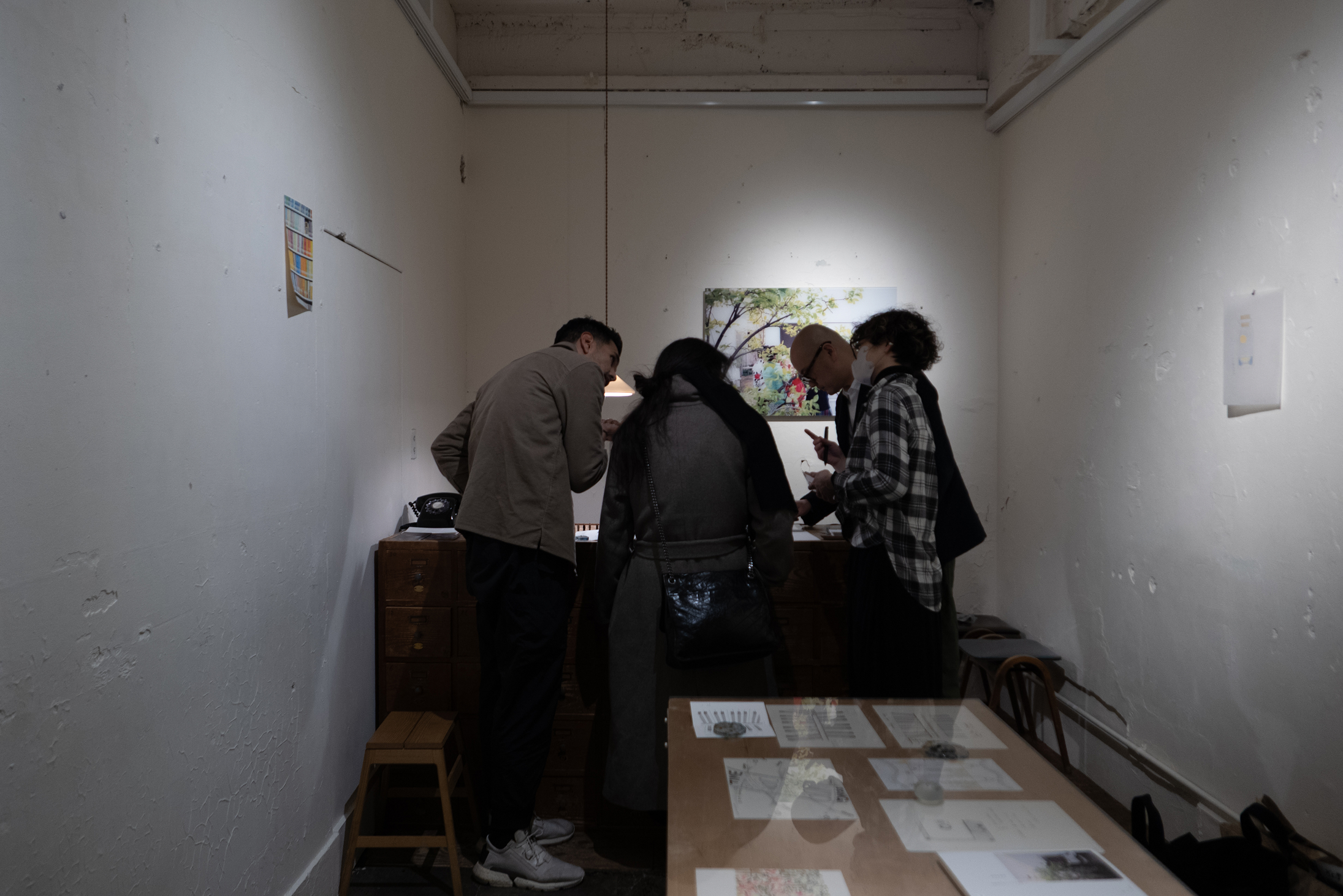
In an era of infinite scroll and instant access, Morioka Shoten practices constraint as innovation. One book. One week. One chance to see literature transformed into something you can hold, taste, contemplate. It's intimate curation at its most disciplined and most generous.
The books are in Japanese. We didn't read them, didn't know their full plots. That didn't matter, each of us left with something. The art translates. We left with our ceramic sea-textured magnet, evidence of a story we experienced without ever reading a word.
Thank you, Morioka-san, for inspiring us. For creating a space so singular, for helping us think differently, and for reminding us that true innovation often emerges precisely where we dare to move against the current. In your five-by-five-metre room, you've proven that less isn't just more, sometimes, it's everything.
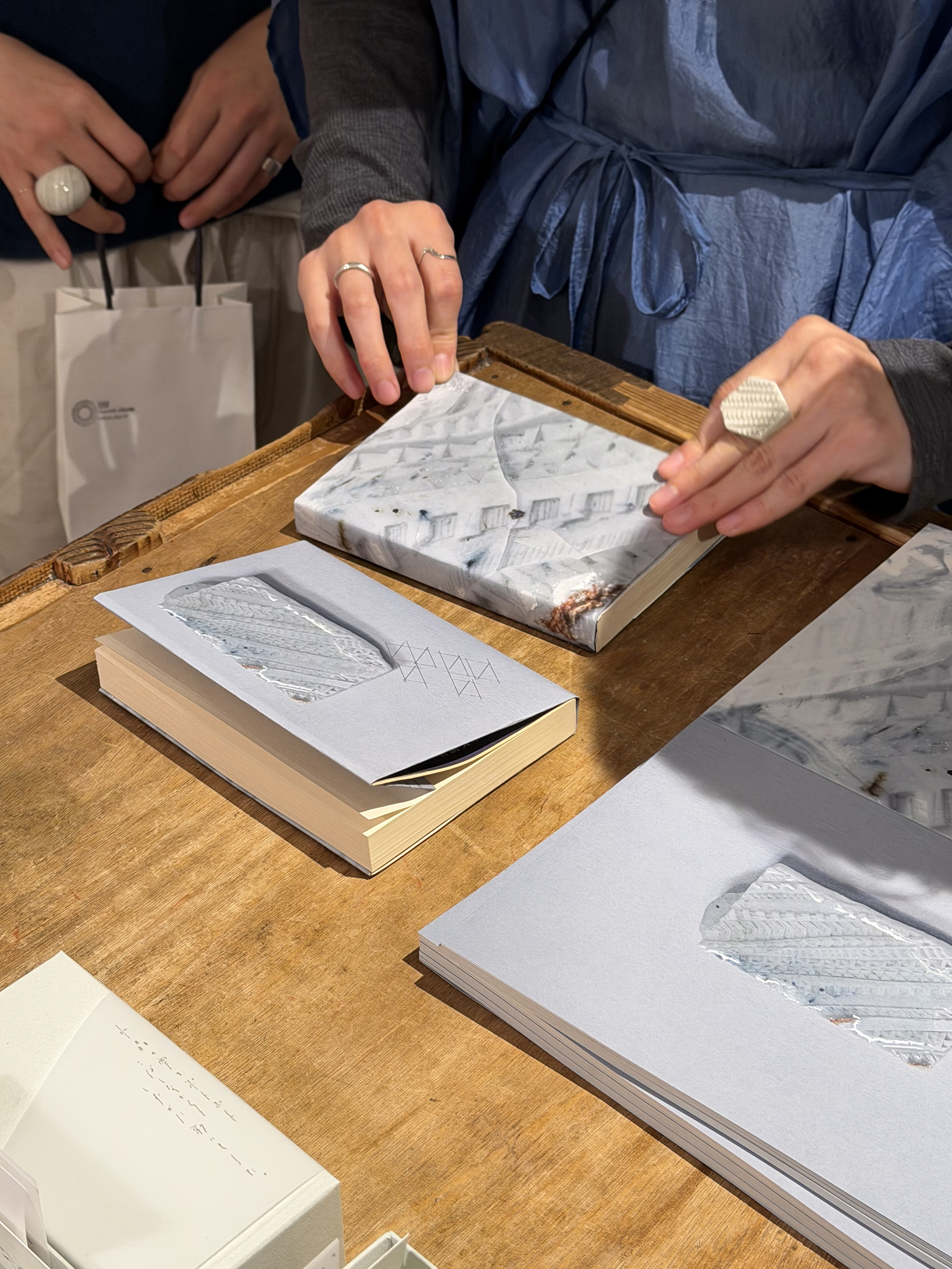
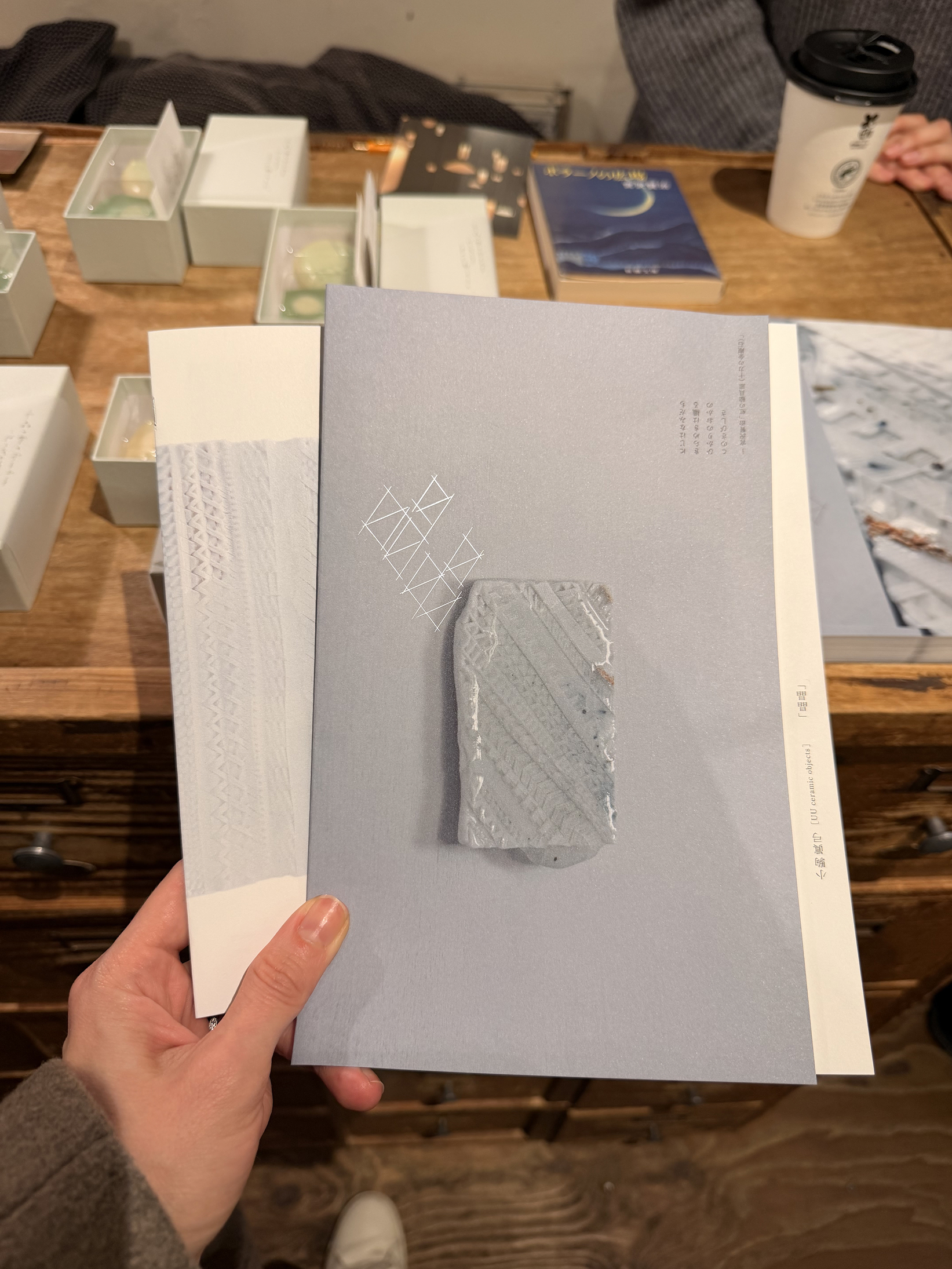
Morioka Shoten is located at Suzuki Building 1F, 1-28-15 Ginza, Chuo-ku, Tokyo. Open Tuesday through Sunday. Expect to find one book, several artists, and zero crowds—unless word gets out. Bring patience. The cold walk is worth it.